Work Page
The History of the Devil and the Idea of Evil
Editorial Summary
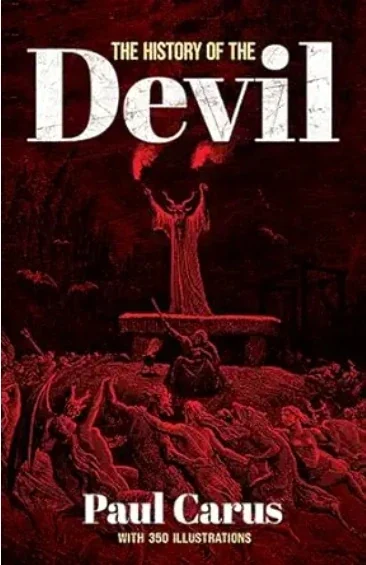
The History of the Devil and the Idea of Evil (1900) is a comparative historical study examining how the personified figure of the Devil and the broader concept of evil developed across a range of religious and cultural traditions, including ancient Egyptian, Mesopotamian and Semitic, Persian, Israelite, Brahmanic, Buddhist, early Christian, and later European traditions. Illustrated with roughly 350 period images, the book presents a wide historical survey rather than a modern specialist treatment of any single tradition.
Featured Book from the Editor
Editor’s book by Will Blesch
Go deeper into the hidden history behind angels, Watchers, Nephilim, and non-human intelligence.
In the Shadow of Goliath examines biblical texts, Second Temple traditions, ancient mysteries, and modern high-strangeness reports without reducing the subject to either "ancient aliens" or the claim that all "aliens" are demons.
Why This Book Is in the Directory
Carus's book is a comparative historical study of the Devil and the idea of evil across many traditions — a foundational, direct-scope entry for the directory's coverage of how the figure of the Devil has been understood.
Historical Context
Published in 1900, The History of the Devil and the Idea of Evil surveys the development of ideas about evil and the personified Devil across a wide range of religious and cultural traditions. The book reflects the comparative study of religion that became increasingly prominent in the late nineteenth and early twentieth centuries.
What the Author Presents
Carus approaches the subject comparatively and historically, tracing how different cultures and religious traditions understood evil and gave it symbolic or personal form. His treatment is broad and non-confessional, emphasizing historical development and cross-cultural comparison rather than defending the theology of any single tradition.
Intended Reader
Best suited for readers studying demonology and the historical development of Devil and Satan traditions; historians of religion and ideas; comparative-religion readers; and researchers interested in religious art and iconography. Less suitable for readers seeking current peer-reviewed scholarship, a devotional treatment, or practical occult instruction.
Strengths and Limitations
Carus's book is valuable as an early, wide-ranging, heavily illustrated comparative treatment of the Devil and ideas of evil across cultures. Its breadth, accessibility, and visual documentation make it useful both as a reference and as an artifact of turn-of-the-century comparative religious writing. Because it predates contemporary methods in religious studies, anthropology, archaeology, and textual criticism, individual historical claims should be checked against current scholarship. Readers should also remain alert to period assumptions or classifications that may no longer reflect present scholarly standards. Its continued value lies primarily in its broad historical survey, illustration corpus, and usefulness for tracing how these subjects were presented in 1900 — not in serving as the final authority on the traditions it describes.
Edition Disclosure
Purchase
View a purchasable edition on AmazonBook Facts
| Author | Paul Carus |
|---|---|
| Qualifying year | 1900 |
| Manifestation type | First edition |
| Language | English |
| Modern Amazon availability | Verified — owner-confirmed |
| ASIN | 0486466035 |